How to Choose the Right Siding for Your Home Exterior
How to Choose the Right Siding for Your Home Exterior
Siding is one of the biggest visual decisions you’ll make during an exterior upgrade, but it isn’t only about curb appeal. The right siding helps protect your home from sun, rain, wind, pests, and everyday wear. It can also improve energy performance, reduce maintenance, and make an older home feel completely refreshed.
The challenge is that every material has tradeoffs. A product that looks perfect in a showroom may not be the best fit for your climate, your budget, or the amount of upkeep you want to handle. Here’s a practical way to narrow your options before you commit.
Start with the job your siding needs to do
Before comparing colors and profiles, take a close look at your home and your goals. Are you replacing siding that is failing, or are you changing the character of the house? Are you trying to stop moisture problems, improve insulation, or simply give the exterior a more current look?
Look for warning signs such as warped boards, peeling paint, soft spots, cracked panels, visible gaps, or staining around windows and doors. These issues can point to water intrusion or deteriorated sheathing underneath. If the existing siding is damaged, replacing the visible material without addressing the source of the moisture will only postpone the problem.
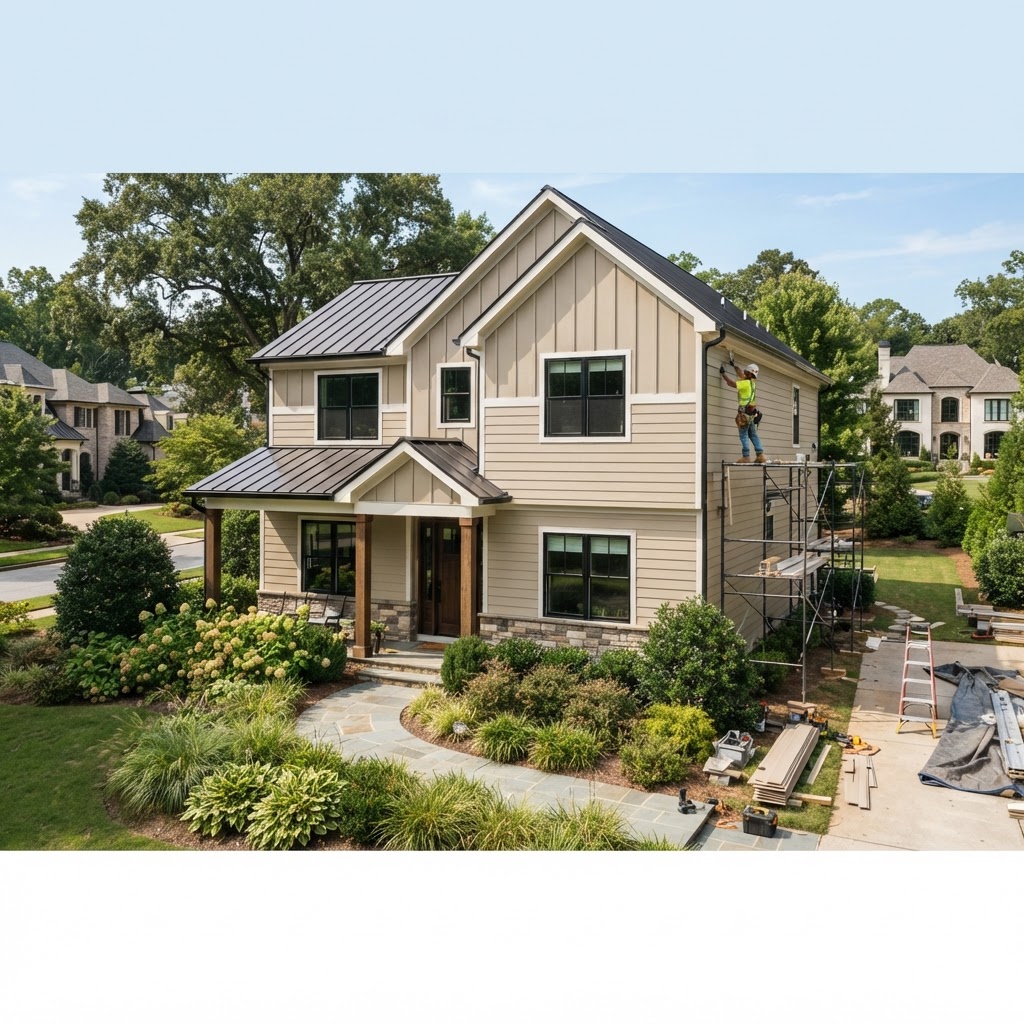
It also helps to think about the home’s architecture. Traditional lap siding may complement a classic floor plan, while vertical panels, shakes, or carefully placed board-and-batten accents can add interest to a contemporary or transitional design.
Understand the most common siding materials
Fiber cement is a popular choice for homeowners who want the appearance of painted wood with less vulnerability to rot, insects, and moisture. It is durable and available in several profiles and textures. The tradeoff is that it is heavier than some alternatives, so installation needs to be handled carefully and according to the manufacturer’s requirements.
Engineered wood offers a warm, natural appearance and is often lighter and easier to handle than traditional wood. Quality products are designed to resist common problems like splitting and pests. As with any wood-look product, detailed installation around corners, penetrations, and openings is essential.
Vinyl is usually one of the more budget-friendly options and requires relatively little maintenance. It comes in a wide range of colors and profiles. It can be a smart fit for many homes, although homeowners should pay attention to product quality, color selection, and how the material will perform in strong sun or severe weather.
Natural wood delivers an authentic look that is difficult to duplicate. Cedar and other species can be beautiful, but they require a real maintenance plan, including cleaning, staining, or painting at appropriate intervals. Wood siding is best for homeowners who appreciate the material and are comfortable caring for it over time.
Metal siding can create a crisp, modern appearance and offers strong resistance to many common exterior problems. It is especially useful in certain contemporary designs and commercial applications. However, dents, scratches, and color matching should be considered before installation.
Match the material to your climate
Your local weather should influence the decision as much as the style of your home. In hot, humid regions, siding needs to handle moisture and intense sun while allowing the wall assembly to dry properly. That makes correct flashing, drainage planes, caulking details, and ventilation just as important as the siding product itself.
Homes exposed to heavy rain or wind need especially careful detailing around windows, doors, rooflines, decks, and utility penetrations. A strong siding system can still fail if water is directed behind it. Ask your contractor how the installation will manage bulk water and where the wall assembly is designed to drain.
Color matters in warm climates, too. Darker finishes can absorb more heat and may show fading sooner depending on the product. A qualified contractor can help you compare manufacturer ratings and recommend colors that make sense for your home’s exposure.
Don’t overlook insulation and air sealing
New siding is an opportunity to inspect the exterior wall system. Depending on the home, the project may include a weather-resistant barrier, new flashing, continuous exterior insulation, or targeted air sealing. These improvements can make the finished exterior perform better and help reduce drafts and temperature swings indoors.
That does not mean every siding replacement needs a major wall rebuild. The right approach depends on the existing construction, local requirements, budget, and condition of the sheathing. The important thing is to discuss performance before the old siding comes off, not after the project is already underway.
Budget for the complete installation—not just the panels
Siding estimates can be misleading when they focus only on the material. Your total cost may include removal and disposal, repairs to sheathing, housewrap or flashing, trim, soffits, fascia, window details, painting, permits, lifts, and cleanup.
Get clarity on what is included in the proposal. Ask whether the contractor has allowed for hidden damage, how change orders will be handled, and whether the estimate includes finishing details at corners and transitions. A slightly higher material price may be worthwhile if it reduces maintenance or creates a more durable assembly, but value comes from the entire installed system.
Choose details that make the design feel intentional
A great siding project usually uses more than one design decision, but it does not need to become busy. Consider a primary siding profile with a complementary accent at the entry, gables, porch, or garage. Coordinate the siding with the roof, windows, doors, lighting, and trim rather than choosing each element separately.
Request physical samples if possible. Exterior colors change dramatically in morning sun, afternoon shade, and overcast weather. Seeing a small sample next to your roof and masonry is much more reliable than judging a screen image.
Questions to ask before signing
Before work begins, ask:
- What condition is the sheathing in, and how will hidden damage be handled?
- What flashing and moisture-management details are included around openings?
- Which maintenance will the selected product require, and how often?
- Who handles permits, inspections, cleanup, and final touch-ups?
- What warranty covers the material, and what warranty covers installation?
The best siding choice balances appearance, durability, maintenance, climate, and total installed cost. Take time to evaluate the wall system—not just the color board—and your exterior upgrade will look better and perform better long after the final trim is installed.
Creekside Solutions can help you compare materials and plan the details of a complete exterior renovation. A thoughtful conversation before demolition is often the simplest way to avoid expensive surprises later.